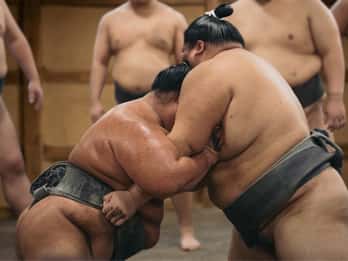
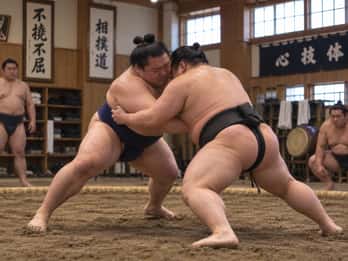
When the stables do not train
There is no practice to watch during the 15 days of a tournament, and the wrestlers usually rest for seven to ten days after it. In 2027 that rules out Tokyo practice from 10 January until around the start of February, from 9 May until around the start of June and from 12 September until early October. A Japan travel guide on stable visits names the weeks before a Tokyo tournament as the best time, when the wrestlers are preparing.
The tournaments outside Tokyo matter too, because the wrestlers travel to them: Osaka from 14 to 28 March, Nagoya from 11 to 25 July and Fukuoka from 14 to 28 November 2027. Visits around those weeks may be limited, so look at the booking calendar for your exact dates first. That includes the cherry blossom weeks in late March and early April.
The rules at the ring
Each stable sets its own house rules, and the guide explains them before you go in. The points below come from a Japan travel guide on practice visits and from the listings here.
- Stay silent for the whole session, which can mean up to two hours.
- Sit on the floor, either kneeling or with your legs crossed tightly, and never point the soles of your feet towards the ring.
- No eating or drinking while you watch.
- You cannot leave once practice has started, so use the toilet before you go in.
- Photos are often allowed with the flash and shutter sound off, but video is almost always forbidden. The Air Choice visit does not allow phones at all.
The Air Choice listing also warns that the room can get cold from the air conditioning, so bring a layer even in summer.
What you will and will not know in advance
Several listings do not name the stable before the day, so you cannot pick a stable for a favourite wrestler. Whether a yokozuna or another top-ranked wrestler trains that morning is only clear when you arrive. Group size varies too: the ringside tour limits its groups to 10, but one guest on it counted around 40 people in the room in total and found the view from the back rows poor. Practice in a stable usually starts between 6:00 and 7:30, according to the same travel guide, so a visit that meets at 07:45 joins a session that is already running.
The journalist tour is the one with a fixed programme after practice. According to its listing, the group walks past the Kokugikan to Yokoamicho Park, stops at the former Yasuda Garden and finishes at Ryogoku station. Questions are answered there rather than in the practice room, and one reviewer noted that the group passed the Kokugikan without going in. The same listing excludes wheelchair users and babies under one, because the stable has a traditional layout and everyone sits on the floor. The Air Choice listing lets children watch if they can stay quiet, at the adult price.
Getting to the meeting points
Two of the visits meet in Ryogoku, at the station of the Toei Oedo line (exit A3 for Air Choice, exit A2 for Japan Shine Tour). JR Ryogoku is a separate station several minutes' walk away, so check the line before you leave the hotel. The ringside tour meets at exit A1 of Kiyosumi-shirakawa, two stops south of Ryogoku on the Oedo line. After a Ryogoku visit, the Ryogoku page lists what is within walking distance, including the free Sumo Museum.
If your dates fall on a tournament, the tournament page covers the guided tournament day instead.