3Grand Sumo tournaments in Tokyo in 2027
15 daysLength of each tournament
4 to 7 weeksBefore a tournament, group seats for guided tours are allocated
07:45Meeting time of the Air Choice practice visit
The 2027 tournament calendar for Tokyo
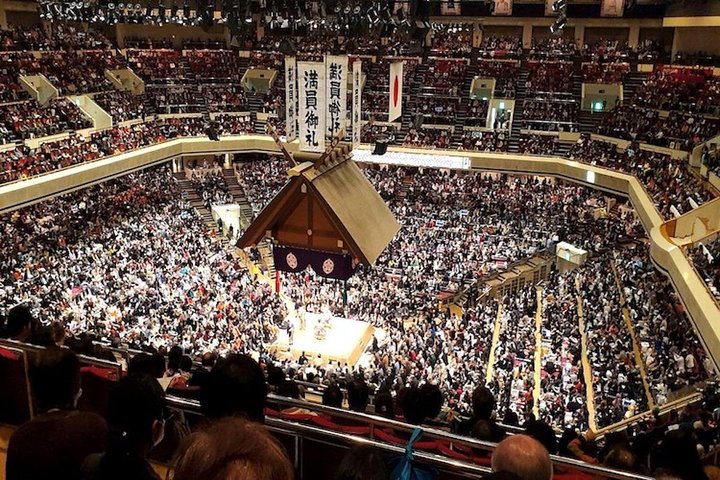
All three Tokyo tournaments take place at the Ryogoku Kokugikan. The dates and the day general ticket sales open come from the official schedule of the Japan Sumo Association; sale dates are in Japan time.
| Tournament | Dates | General ticket sales open | Weeks between sale and first day |
|---|
| January (Hatsu Basho) | 10 to 24 January 2027 | 5 December 2026 | About five |
| May (Natsu Basho) | 9 to 23 May 2027 | 10 April 2027 | About four |
| September (Aki Basho) | 12 to 26 September 2027 | 7 August 2027 | About five |
The rest of the year the tournaments travel: Osaka from 14 to 28 March, Nagoya from 11 to 25 July and Fukuoka from 14 to 28 November 2027. This site stays with Tokyo.
Why tournament seats are hard to get
Several Japan travel guides report that weekend days, the final day of a tournament and the whole January tournament sell out on the first day of general sales. If you miss that day or plan later, the option listed here is a guided tour with its own seat allocation: the operator receives group seats four to seven weeks before the tournament and only then knows which seats you get. Its listing does not name a seat class, so do not count on a ringside box. If no tickets are allocated, you are offered a rebooking or a refund; apart from that, the booking cannot be cancelled.
Visiting for the cherry blossoms
Late March and early April 2027 fall between tournaments. The March tournament is in Osaka (14 to 28 March), and Tokyo's next one opens on 9 May. So during the blossom weeks a show is the realistic way to see sumo in Tokyo; the shows run as usual. Morning practice may be limited while the wrestlers are away in Osaka and shortly after, so look at the booking calendar for your exact dates before you plan around it. If you are coming back in May, note that the May tournament goes on sale on 10 April.
What a sumo show is, and what it is not
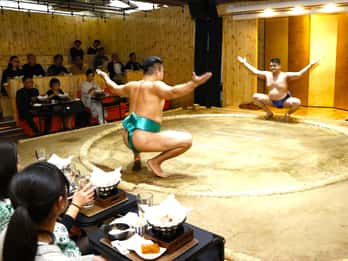
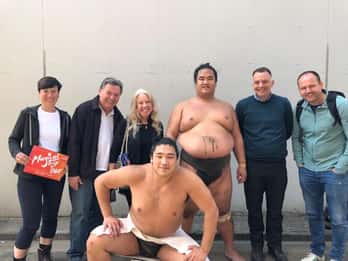
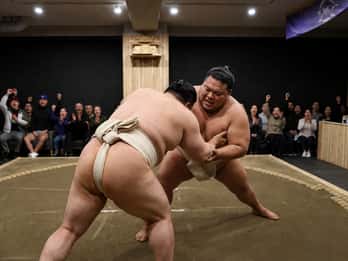
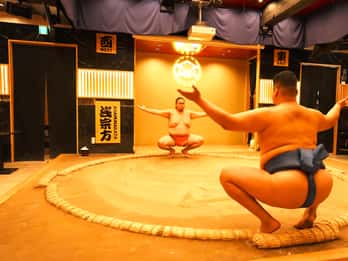
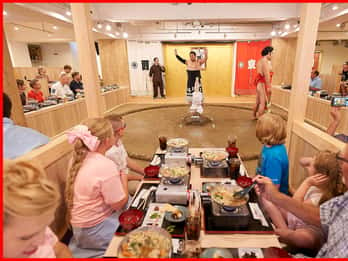
The shows are run for visitors by former wrestlers, several times a day and all year. The Shinjuku show and the Asakusa ANNEX put it in writing: both state that they are not a real tournament. What you get is a demonstration with photos and a limited chance for guests to try the ring. At the Shinjuku show that chance goes to six guests per show, picked by lottery. The meal is where the shows differ most. The Shinjuku and Shibuya shows serve water only, Asakusa and the ANNEX serve full meals, SUMOLAND adds mochi pounding, and Tokyo Sumo Beya serves chanko only at its 11:00 and 19:00 shows.
Morning practice in a stable
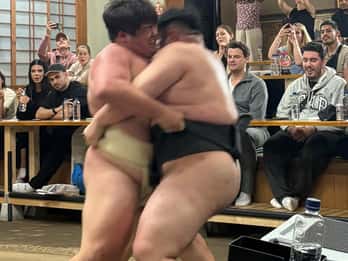
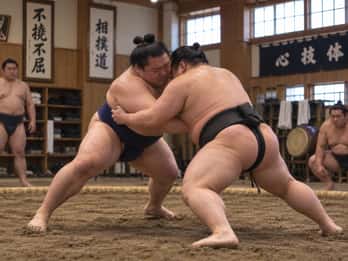
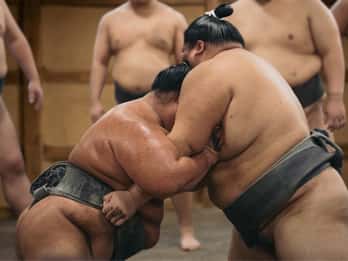
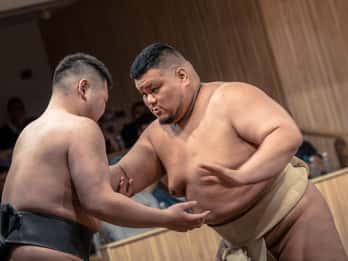
Watching keiko, the morning training of a sumo stable, is the closest you get to real sumo outside a tournament. It is also the format with the most rules. You sit still and quiet beside the ring, and the Air Choice listing does not allow phones during practice. That listing also warns that the room can be cold from the air conditioning, and children pay the full price. Several listings do not name the stable in advance. Stables do not train during the 15 days of a tournament or for 7 to 10 days afterwards, and whether a top-ranked wrestler is present is only clear on the morning itself. The ringside tour refunds in full if the stable cancels; one guest on it counted around 40 spectators and found the view from the back rows poor.
Getting to the venues
The Kokugikan, SUMOLAND and the practice visits by Air Choice and Japan Shine Tour are in Ryogoku, which has two separate stations: JR Ryogoku and Ryogoku on the Toei Oedo line. The meeting points given here are at the Toei station (exit A3 for Air Choice, exit A2 for Japan Shine Tour). Tokyo Sumo Beya and the ringside practice tour meet near exit A1 of Kiyosumi-shirakawa station. The other shows are spread across the city: Shinjuku in Okubo, Shibuya near JR Yoyogi, Ginza near exit C9, and the Asakusa Sumo Club with its ANNEX on Kokusai-dori.
Food, diets and payment
Halal and gluten-free options are scarce. The Asakusa Sumo Club and its ANNEX offer neither, and vegetarian meals in Asakusa need two days' notice. SUMOLAND in Ryogoku makes vegetarian, vegan and gluten-free meals on request and seats guests in boxes for up to six. Bring a card for the Shinjuku and Ginza shows, which do not take cash. The ANNEX has stairs and is not wheelchair accessible.