Traveling Tokyo
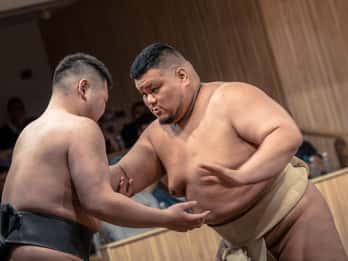
Shinjuku Sumo Show and Experience with Photo
Short and without a meal, 75 to 90 minutes. Be on time: latecomers are not let in.
- Duration: 75 to 90 minutes
- ✓ Free cancellation
Full details
About this experience
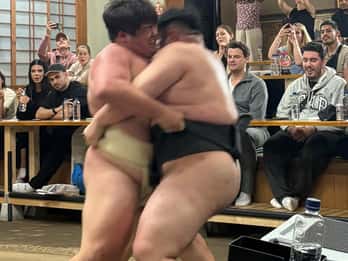
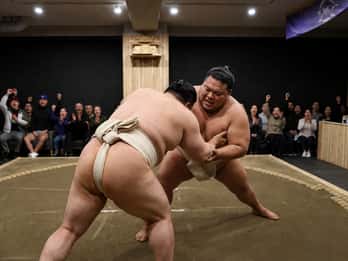
A short sumo show with photo at the Shinjuku Sumo Club in Okubo. The operator states plainly that it is not a real tournament. A few guests get to try the ring themselves, picked by lottery.
Water is provided; there is no meal. Guests who arrive late are not admitted, and payment at the venue is cashless.
What's included
- Sumo show
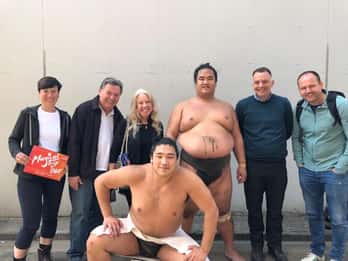
- Photo
- Water
Not included
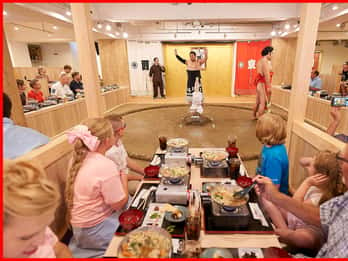
- Food
Meeting point
Shinjuku Sumo Club in Okubo, entrance next to the Daiso shop.
Know before you go
- This is a show, not a tournament.
- Only six guests per show can try the ring, chosen by lottery.
- Late arrivals are not admitted.
- Cashless venue: card payment only.
Facts from the operator's sumo listing as of October 2026; the booking platform shows the current terms.