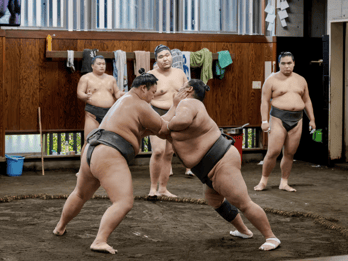
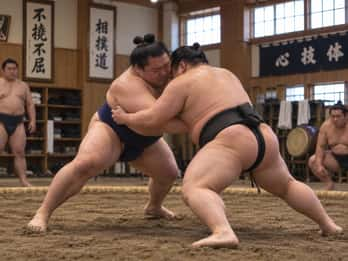
In Tokyo a sumo ticket can be a seat at a tournament, a show with former wrestlers or a visit to the morning practice of a stable. Our verdict rests first on what you actually watch, then on your travel dates, and only then on length and food.
Ranked bouts or a demonstration
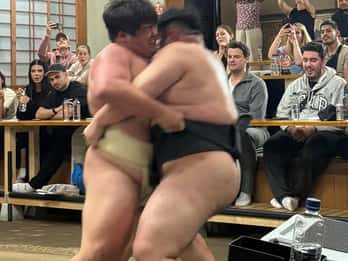
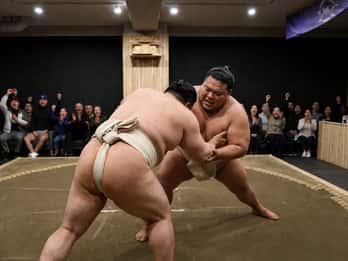
Only the Grand Sumo tournament has competitive bouts whose results count. The shows are demonstrations for visitors; the Shinjuku show and the Asakusa ANNEX state in their listings that they are not a real tournament. Morning practice is real training between active wrestlers, bout after bout, but without results. That order is the basis of our verdict. Tournament, show and practice compared by travel date.
Your travel dates
In 2027 Tokyo hosts its tournaments from 10 to 24 January, 9 to 23 May and 12 to 26 September. The stables do not hold practice during those 15 days or for seven to ten days afterwards, and in March the wrestlers compete in Osaka from 14 to 28 March. The shows run all year, so they are the format that fits any date, the cherry blossom weeks included. Sale days and seat allocation are on the 2027 tournament page.
Seats at the tournament
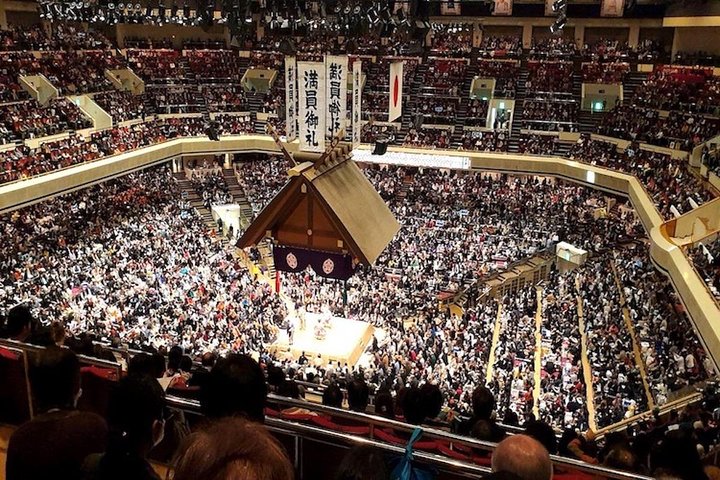
The guided tournament day uses chair seats on the second floor of the Kokugikan: B or C class in the standard option, S or A class in the premium option, not a box at the ring. The operator receives its group seats four to seven weeks before the tournament, and the booking cannot be cancelled unless no tickets are allocated. Up to 20 guests sit together with the guide, who explains through audio headsets. A meal is not included, but a chanko dinner can be added at checkout.
Explanation at the practice
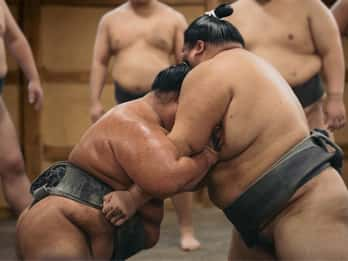
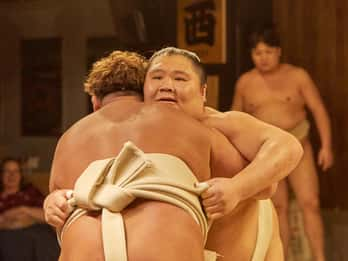
At morning practice visitors sit on the floor and stay silent, and the Air Choice listing does not allow phones. On the Japan Shine Tour visit a sumo journalist explains the practice, and the group then walks past the Kokugikan to Yokoamicho Park and the former Yasuda Garden, three hours in total from exit A2 of Toei Ryogoku station. The Tamanoi visit names its stable in advance and keeps groups to 10. Morning practice, with the rules at the ring.
Children and length
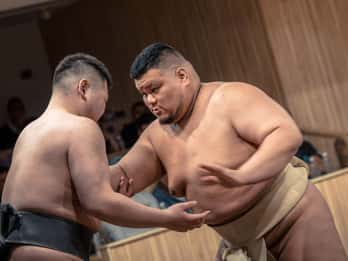
The shortest shows are in Shibuya (75 minutes) and Shinjuku (75 to 90 minutes), and Tokyo Sumo Beya runs shows at 8:30 and 11:00. The journalist tour does not take babies under one, and on the Air Choice practice visit children pay the full price and have to sit still for the whole session. Sumo with kids.
Food at the ring
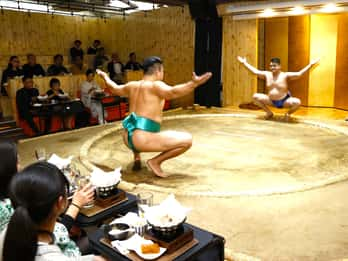
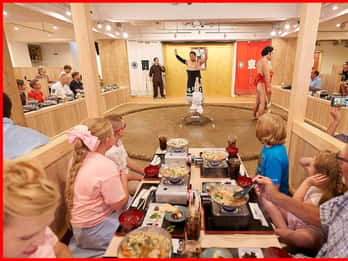
The Asakusa Sumo Club serves chicken hot pot, all you can eat, with a geisha dance and one drink; vegetarian meals there need two days' notice, and there is no halal or gluten-free option. For vegetarian, vegan or gluten-free food, SUMOLAND in Ryogoku prepares all three on request. At Tokyo Sumo Beya only the 11:00 and 19:00 shows include chanko. Sumo shows with dinner.